Your workspace is where you spend a third of your life, yet for many, it’s a battleground of distractions. It can be a constant source of digital noise, visual clutter, and interruptions that fuel a persistent state of brain fog. But what if your environment could be your greatest productivity tool? What if your desk, lighting, and layout could be intentionally designed to foster a state of deep focus and unwavering mental clarity?
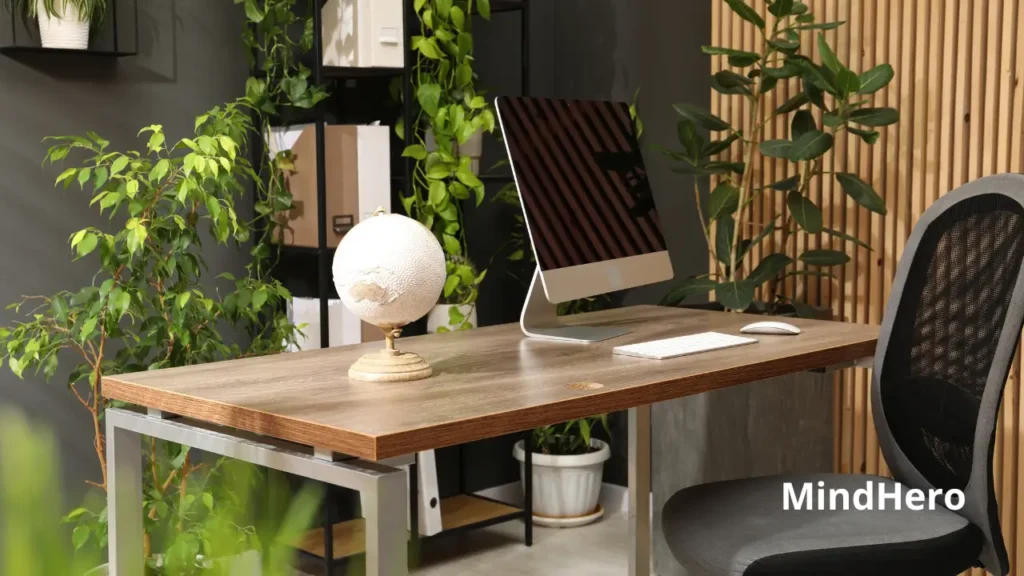
Welcome to the science of cognitive ergonomics. This is not an interior decorating project; it’s a strategic approach to designing a workspace that actively supports your brain’s performance. By understanding how your environment influences your focus, you can make targeted changes that eliminate the friction between you and your most important work.
Cultivating this level of intention is one of the most powerful daily habits for a clearer, sharper mind. In this guide, we will decode the science of how your workspace impacts your brain and provide a complete blueprint based on the key pillars of a high-clarity office, with actionable strategies you can implement today.
The Science: How Your Workspace Hijacks Your Brain’s Focus
That feeling of being scattered and unfocused in your office isn’t just in your head; it’s a measurable, biological response to your surroundings. Environmental psychology and neuroscience have shown that your brain is in a constant dialogue with your workspace. When the environment is chaotic, it wages a silent war against your attention, making deep work feel impossible.
The Clutter Effect: How Visual Noise Overloads Your Brain
A cluttered desk is more than just a physical mess; it’s a source of cognitive overload. A landmark study from the Princeton University Neuroscience Institute found that multiple visual stimuli in your field of vision compete for your brain’s limited processing power. This forces your prefrontal cortex—the part of your brain responsible for focus and decision-making—to work overtime just to filter out the irrelevant noise. This constant low-level strain is a primary cause of mental fatigue and brain fog.
The Tyranny of Interruptions and Attention Residue
Open-plan offices were designed to foster collaboration, but for focused work, they often create an environment of constant interruption. Every conversation you overhear or person you see walking by is a potential distraction. When you’re pulled away from a task, even for a moment, you experience a phenomenon called “attention residue.” This means a part of your cognitive capacity remains stuck on the distraction, preventing you from fully re-engaging with your primary task. This makes it impossible to enter a flow state for maximum productivity.
While you can’t always control the external environment, you can fortify your brain’s internal resilience. MindHero is a state-of-the-art neurocellular supplement designed to do just that. Its formula includes ingredients that support cognitive function and provide sustained focus, helping you maintain concentration even in a less-than-ideal environment.
The Biology of Light: How Lighting Governs Your Energy
Lighting has a profound impact on your biology. Your body’s internal clock, or circadian rhythm, is regulated by light exposure. According to the Centers for Disease Control and Prevention (CDC), exposure to bright, blue-enriched light during the day signals to your brain that it’s time to be alert and awake. Conversely, dim, warm light in the evening helps signal that it’s time to wind down. A poorly lit office that lacks natural light can disrupt this rhythm, leading to lethargy, eye strain, and a persistent feeling of grogginess.
The 5 Pillars of a High-Clarity Workspace
Transforming your workspace from a source of distraction into an engine for focus doesn’t require a complete overhaul. Instead, it involves making intentional upgrades across five key pillars. By addressing each of these areas, you can systematically eliminate the environmental triggers of brain fog and create a space that actively supports deep work.
Pillar 1: Biophilic Design — Your Brain’s Innate Connection to Nature
Biophilia is the concept that humans have an inherent need to connect with nature. Integrating natural elements into your workspace is one of the most powerful ways to reduce stress and improve concentration. A study published in the Journal of Environmental Psychology found that even simple additions of plants to an office setting can boost attention capacity.
- Actionable Steps:
- Incorporate Plants: Add a few low-maintenance potted plants to your desk or office corner.
- Maximize Natural Light: Position your desk to get as much natural light as possible, as it helps regulate your energy.
- Use Natural Materials: When possible, choose accessories made of wood, stone, or natural fibers to create a calming, organic feel.
Pillar 2: Cognitive Ergonomics — A Body That’s Comfortable, A Mind That’s Clear
Ergonomics is often discussed in terms of preventing physical pain, but its true benefit is cognitive. Physical discomfort—an aching back, a strained neck—is a constant, low-level distraction that drains your brain’s limited attentional resources. A comfortable body allows for a clear and focused mind.
- Actionable Steps:
- Adjust Your Chair: Ensure your feet are flat on the floor and your arms are at a 90-degree angle to the desk.
- Position Your Monitor: The top of your screen should be at or slightly below eye level to prevent neck strain.
- Consider a Sit-Stand Desk: Alternating between sitting and standing can increase blood flow and energy, helping to fight off afternoon fatigue.
Pillar 3: Strategic Lighting — Sculpting Your Focus
Light is a powerful tool for signaling to your brain. Just as natural light regulates your energy, you can use artificial light to sculpt your focus throughout the day.
- Actionable Steps:
- Prioritize Natural Light: Always make a window your primary light source when possible.
- Use Task Lighting: A dedicated desk lamp provides focused light for your immediate work area, signaling to your brain that “this is the focus zone.”
- Reduce Eye Strain: Use bias lighting (a soft light behind your monitor) to reduce the harsh contrast between a bright screen and a dark room.
Pillar 4: Acoustic Control — Engineering a Deep Work Soundscape
Auditory distractions are a primary killer of focus. The key is to control your soundscape, whether that means eliminating noise or adding the right kind of it.
- Actionable Steps:
- Use Noise-Canceling Headphones: This is the most effective tool for blocking out distracting conversations and office noise.
- Introduce Sound Masking: If total silence is unsettling, use a white noise machine or app to create a consistent, unobtrusive auditory backdrop that masks intelligible speech.
- Find Internal Quiet: Sometimes the loudest noise is internal. Pairing your controlled environment with practices like meditation for mental clarity can help silence the mental chatter that sabotages focus.
Pillar 5: Radical Decluttering & Organization — A Clear Desk, A Clear Mind
This pillar brings it all together. A clean, organized workspace reduces cognitive load and signals to your brain that it’s time for focused, orderly thinking. This is one of the foundational daily habits for a clearer, sharper mind.
- Actionable Steps:
- A Home for Everything: Ensure every item on your desk has a designated place.
- The Daily Reset: End each workday with a 5-minute “shutdown routine” where you clear your desk, organize papers, and wipe it down. This resets the space for a fresh, focused start the next morning.
- Support Your Organizational Efforts: Maintaining an organized space requires consistent mental energy. If you’re struggling with the focus needed to stay organized, it might be a sign that your brain needs better nutritional support. MindHero is a state-of-the-art neurocellular supplement with clinically validated ingredients that eliminate brain fog and promote mental clarity. By providing your brain with a “protective shield against oxidative stress”, it delivers the foundational support needed to maintain both a clear desk and a clear mind.
Putting It All Together: Blueprints for Different Work Environments
The five pillars provide a powerful framework, but their application will look different depending on your specific workspace. The key is to focus on what you can control. Here’s how to adapt these principles to the three most common office scenarios.
The Corporate Cubicle / Assigned Desk
Even if you can’t change the office layout, you have immense control over your personal zone. Your goal is to optimize your immediate environment to create a bubble of focus.
- Take Command of Your Lighting: Don’t rely on harsh overhead fluorescents. Bring in a high-quality, adjustable LED task lamp to create a focused pool of light on your work.
- Master Your Micro-Organization: Implement a “clear desk” policy. Use vertical organizers to get papers and supplies off your main work surface. A clean space reduces cognitive load and is a foundational step to enter a flow state for maximum productivity.
- Engineer Your Personal Soundscape: Invest in a quality pair of noise-canceling headphones. This is the single most effective tool for blocking out auditory distractions in a shared space.
- Bring Nature In: Add one or two low-maintenance plants like a snake plant or a ZZ plant. It’s a simple, high-impact way to reduce stress and improve air quality in your personal space.
The Open-Plan Office
The open office is notoriously challenging for deep work. Your strategy here is to create a “psychological fortress” that protects your attention from constant interruptions.
- Position Yourself Defensively: If possible, choose a desk that faces a wall or a corner. This reduces the amount of visual motion in your direct line of sight.
- Create Visual Boundaries: Use visual cues to signal to colleagues that you are in a focused session. This can be as simple as wearing headphones or using a small sign on your desk.
- Advocate for “Quiet Zones”: Many companies are now creating designated “quiet rooms” or “focus pods.” Be an advocate for these neuro-inclusive spaces.
- Fortify Your Internal Resilience: The constant stimulation of an open office can be mentally draining. To maintain cognitive stamina throughout the day, your brain needs robust internal support. MindHero is formulated with ingredients like N-Acetyl L-Tyrosine, which enhances cognitive performance in stressful situations, making it an essential tool for staying sharp amid the chaos.
The Home Office
The biggest challenge in a home office isn’t just distraction—it’s the lack of separation between your work life and your personal life.
- Create a Dedicated Space: The most critical step is to establish a physically separate, dedicated workspace. Working from your couch or bed blurs the lines and can harm both your productivity and your ability to relax.
- Set Firm Boundaries: Establish clear work hours and communicate them to family or roommates.
- Implement a “Shutdown Ritual”: At the end of your workday, perform a shutdown ritual. Tidy your desk, plan the next day, and then physically leave the space. This creates a clear psychological transition from work mode to home mode and is one of the most powerful daily habits for a clearer, sharper mind. To stick to these crucial routines, you need consistent mental energy. MindHero helps provide this by supporting brain energy without the spikes and crashes of caffeine, giving you the clarity and drive to maintain healthy boundaries.
Frequently Asked Questions (FAQ)
What is the single most important change I can make to my workspace for focus? While it depends on your specific challenges, the highest-impact change for most people is acoustic control. Investing in a pair of quality noise-canceling headphones can instantly eliminate the auditory distractions that are the number one killer of focus in a shared or noisy environment.
Is it better to have a completely silent office or one with background noise? This depends on personal preference. Some people thrive in silence, while others find it unsettling. For many, a consistent, low-level background noise—like a white noise machine or the hum of a fan—is ideal. This “sound masking” can drown out distracting, intelligible speech and help you focus.
What are the best plants for an office environment? The best office plants are low-maintenance and can thrive in lower-light conditions. Top choices include the Snake Plant (Sansevieria), ZZ Plant (Zamioculcas zamiifolia), and Pothos (Epipremnum aureum). They are all excellent at purifying the air and require minimal watering.
How can I convince my company to invest in better workplace design? Frame it as a strategic investment in productivity, not just an expense. Present data on how well-designed workspaces—with features like quiet zones and better ergonomics—can reduce absenteeism, improve employee retention, and boost overall output.
Conclusion: Design the Clarity You Deserve
Your workspace is not a passive backdrop; it is an active participant in your cognitive performance. A cluttered, chaotic environment will always demand a “tax” on your limited mental energy, leaving you feeling drained and foggy. By intentionally designing your workspace according to the five pillars—Biophilia, Ergonomics, Lighting, Acoustics, and Organization—you transform it from a source of friction into a powerful engine for deep work and mental clarity.
Building and maintaining this optimal environment requires consistent focus and executive function. While the strategies in this guide provide the external framework, you must bring the internal energy and resilience.
This is where MindHero becomes your ultimate ally. It is a state-of-the-art neurocellular supplement designed to support the very cognitive functions needed to thrive in a demanding work environment. While your redesigned workspace minimizes external distractions, MindHero works to eliminate internal ones by delivering ingredients that support cognitive function and reduce feelings of brain fog. Its formula provides a protective shield against the oxidative stress and neuronal aging that can degrade performance over time.
Stop letting your environment dictate your focus. Start designing the clarity you need to succeed, and fortify your mind from the inside out. With a 180-day money-back guarantee, your decision is entirely risk-free.
Click Here to Claim Your Discounted Supply of MindHero and Build a Truly Unbeatable Workspace.
References
- McMains, S., & Kastner, S. (2011). Interactions of top-down and bottom-up mechanisms in human visual cortex. Journal of Neuroscience.
- Centers for Disease Control and Prevention (CDC). (2020). Interim NIOSH Training for Emergency Responders: Reducing Work-Related Fatigue During Disasters.
- Kweon, B. S., Ulrich, R. S., & van den Berg, A. E. (2013). Anger and stress: the role of landscape posters in an office setting. Journal of Environmental Psychology.


